


Key Takeaways
Saylor opposed the BIP-110 fork, warning that changing consensus to stop spam sets a dangerous precedent.Adam Back criticized BIP-110, stating the anti-spam rules conflict with free, permissionless money.Purists support the fork to block non-monetary data, while critics predict a minor long-term impact.
Michael Saylor Labels BIP-110 As ‘Dangerous’
As the activation of Bitcoin Improvement Proposal-110 (BIP-110), a so-called anti-spam fork for Bitcoin, looms, industry figures are increasingly taking critical positions about the effect that it might have on the wider Bitcoin ecosystem.
Michael Saylor, executive chairman and co-founder of Strategy, the largest corporate holder of BTC, has raised his worries about the upcoming fork, which proposes to “temporarily limit the size of data fields at the consensus level, in order to correct distorted incentives caused by standardizing support for arbitrary data,” as advertised on its website.
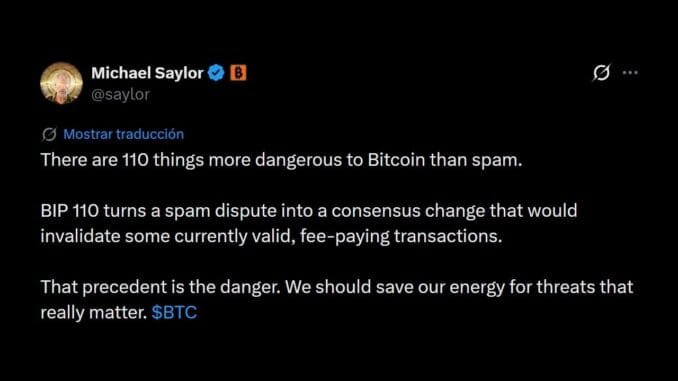
On social media, Saylor stressed that there were “110 things more dangerous to Bitcoin than spam,” disregarding the main issue that BIP-110 supporters, including Ocean Mining’s Luke Dashjr, aim to correct with this temporary implementation.
Highlighting the fragmentation this might cause in the bitcoin ecosystem, Saylor stresses that BIP-110 “turns a spam dispute into a consensus change that would invalidate some currently valid, fee-paying transactions.”
“That precedent is the danger. We should save our energy for threats that really matter,” Saylor concluded, agreeing with an earlier post by Hashcash pioneer Adam Back, who qualified the objectives of this fork as “not grounded” and in “hard conflict with free cypherpunk permissionless money.”
“It would be sad if bitcoin lost people disillusioned due to simple lack of understanding of what’s going on,” Back concluded.
While his position has drawn scrutiny from several bitcoin purists, who defend “ bitcoin as money” ideals and reject any non-monetary use for the network, Saylor has been consistent in his stance against this move, adding to the heated debate on this controversial fork.
On July 9, Saylor stated that spam was not a problem for bitcoin’s network today and reminded that transaction fees were low, facilitating the movement of funds globally. “The free market has always solved Bitcoin’s blockspace challenges,” he assessed at that time.
It remains to be seen whether BIP-110 will have a relevant effect on bitcoin’s policies going forward, or it will finally become a “nothingburger,” as Casa CSO Jameson Lopp predicts.



Be the first to comment